
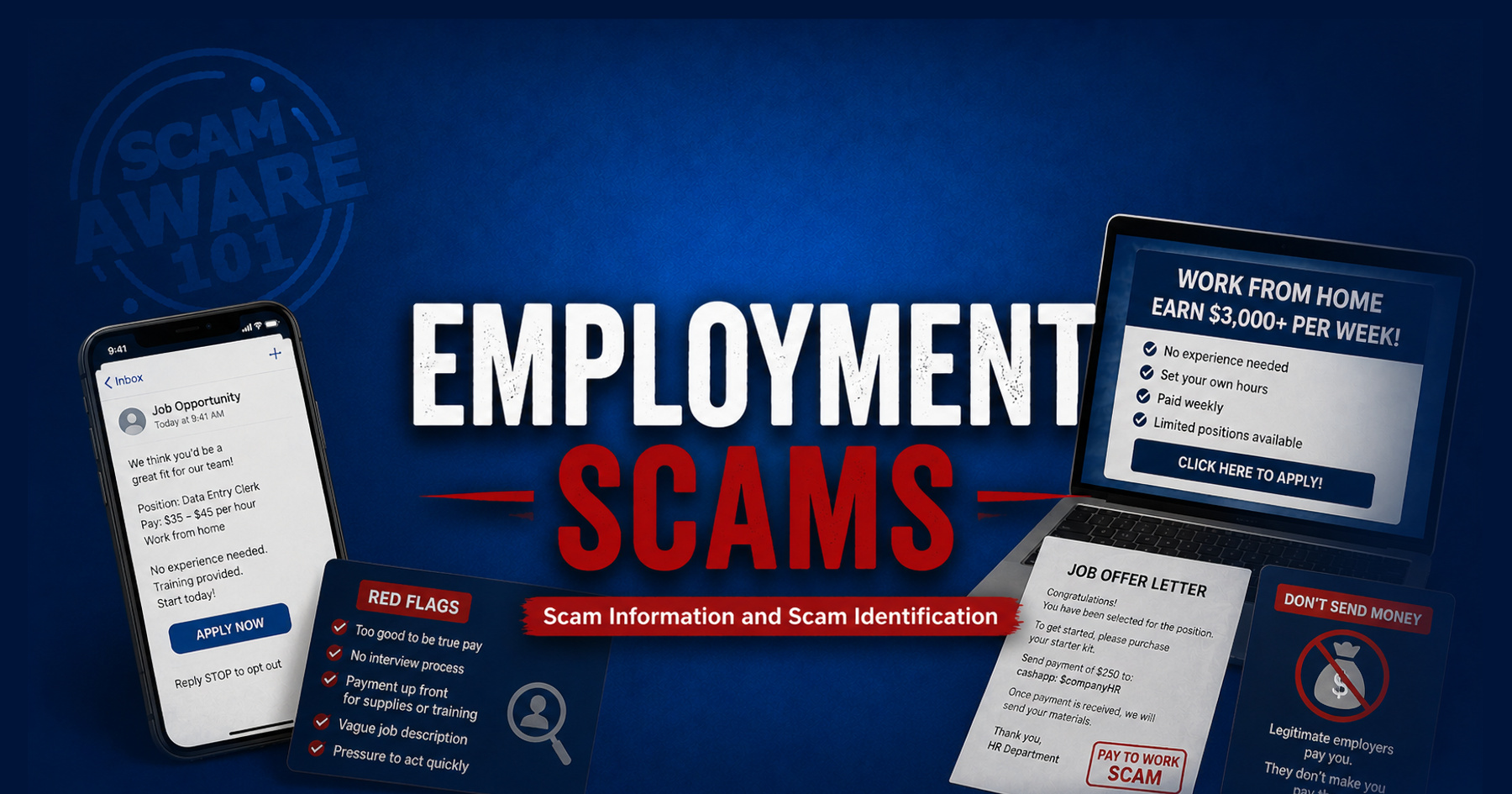
Employment Scams (Scam Information)
What is a "Employment" Scam?
An employment scam is a fake job opportunity designed to steal money, personal information, or both from job seekers. Scammers often post fake listings on job boards, social media, messaging apps, or through email, making the position look legitimate and urgent. They may offer remote work, high pay, flexible hours, quick hiring, or little-to-no experience requirements to attract victims. After gaining trust, they may ask the victim to provide sensitive details, pay upfront fees, buy equipment, deposit fake checks, or move money through their own bank account. Some employment scams impersonate real companies and use copied logos, fake recruiter names, and professional-looking documents. The scam usually ends when the payment fails, the check bounces, or the victim realizes their identity or banking information has been exposed.
How the Scammers Target New Victims:
Employment scammers contact victims through fake job postings, unsolicited emails, text messages, social media messages, messaging apps, and online job platforms. They may also scrape resumes from job sites and contact people directly while pretending to be recruiters. Many scams target people looking for remote work, part-time jobs, work-from-home income, entry-level roles, or urgent employment. The scammer may push the victim to communicate outside the original platform using email, WhatsApp, Telegram, or text.
Who the Scammers Impersonate:
Employment scammers may impersonate:
- Real companies and well-known brands
- Human resources departments
- Recruiters and hiring managers
- Staffing agencies
- Remote-work employers
- Payroll or onboarding teams
- Job board representatives
- Executives or department managers
How to Spot a "Employment" Scam:
What the Scammers Say (Scam Narratives / Fake Storylines):
Scammers may say the victim has been selected for an interview, hired immediately, or approved for a remote position after only a short chat or questionnaire. They often claim the company will send a check so the victim can buy work equipment, software, office supplies, or training materials. Some say the victim must pay for background checks, certifications, onboarding, shipping, or equipment before starting. Others claim the job involves processing payments, receiving packages, reshipping items, buying gift cards, transferring funds, or using the victim's personal bank account for company business. They may also say the position is urgent and the victim must act quickly to secure the role.
Information the Scammers Ask For:
Employment scammers may ask for Social Security numbers, bank account details, direct deposit forms, copies of IDs, home addresses, dates of birth, usernames, passwords, tax forms, or payment app information. They may also ask victims to deposit checks, send money, buy gift cards, purchase cryptocurrency, receive packages, ship items, or open accounts in their own name. In some cases, they request remote access to the victim's device or ask the victim to download suspicious software.
Scam Warning Signs and Red Flags:
Warning signs include a job offer without a real interview, unusually high pay for simple work, vague job duties, poor grammar, pressure to respond quickly, interviews only by text, and requests to move communication off the job platform. Other red flags include being asked to pay upfront, deposit a check, use personal bank accounts for company funds, buy gift cards, or provide sensitive information before verifying the employer. Email addresses that do not match the company's official domain, fake-looking offer letters, and reluctance to speak by phone or video are also warning signs.
Victim Experiences and Scam Reports:
Victims often report being excited by what appears to be a legitimate job offer, especially for remote or flexible work. Many receive fake offer letters, onboarding forms, or checks that appear official. After depositing a fake check, victims may be told to send money to a vendor, buy equipment, or transfer funds before the bank later reverses the deposit. Others report identity theft after sending personal documents or payroll information. Some victims also become unknowingly involved in package reshipping, money movement, or other activity that can create legal and financial risk.
Protect Yourself from "Employment" Scams:
Dangerous Actions to Avoid:
Do not pay upfront fees for a job, deposit checks from unknown employers, send money to vendors, buy gift cards, transfer cryptocurrency, or use your personal bank account for company transactions. Do not provide Social Security numbers, banking details, ID copies, or tax forms until you have verified the employer and confirmed the job is real. Avoid downloading software, granting remote access, or clicking suspicious links sent by an alleged recruiter. Do not accept jobs that require receiving and reshipping packages or moving money for a company.
Best Practices to Stay Safe:
Verify the job through the company's official website, not just through links sent by the recruiter. Check that the recruiter's email address uses the company's real domain and contact the company directly using a known phone number or website. Search for the job title, company name, and words like "scam" or "fraud" to look for reports. Be cautious with remote jobs that promise high pay for basic tasks or hire without a real interview. Keep personal information private until the employer is verified and the hiring process appears legitimate.
Key Takeaways to Stay Safe:
Real employers do not ask new hires to pay upfront, deposit checks for equipment, buy gift cards, or move company money through personal accounts. A fast job offer, text-only interview, or request for sensitive information early in the process should be treated as suspicious. Always verify the company, recruiter, job posting, and communication channel before sharing information or taking action. When in doubt, stop communicating, contact the company directly, and report the suspicious job posting to the platform where it appeared.


