Bank Impersonation Scams (Scam Information)
What is a "Bank Impersonation" Scam?
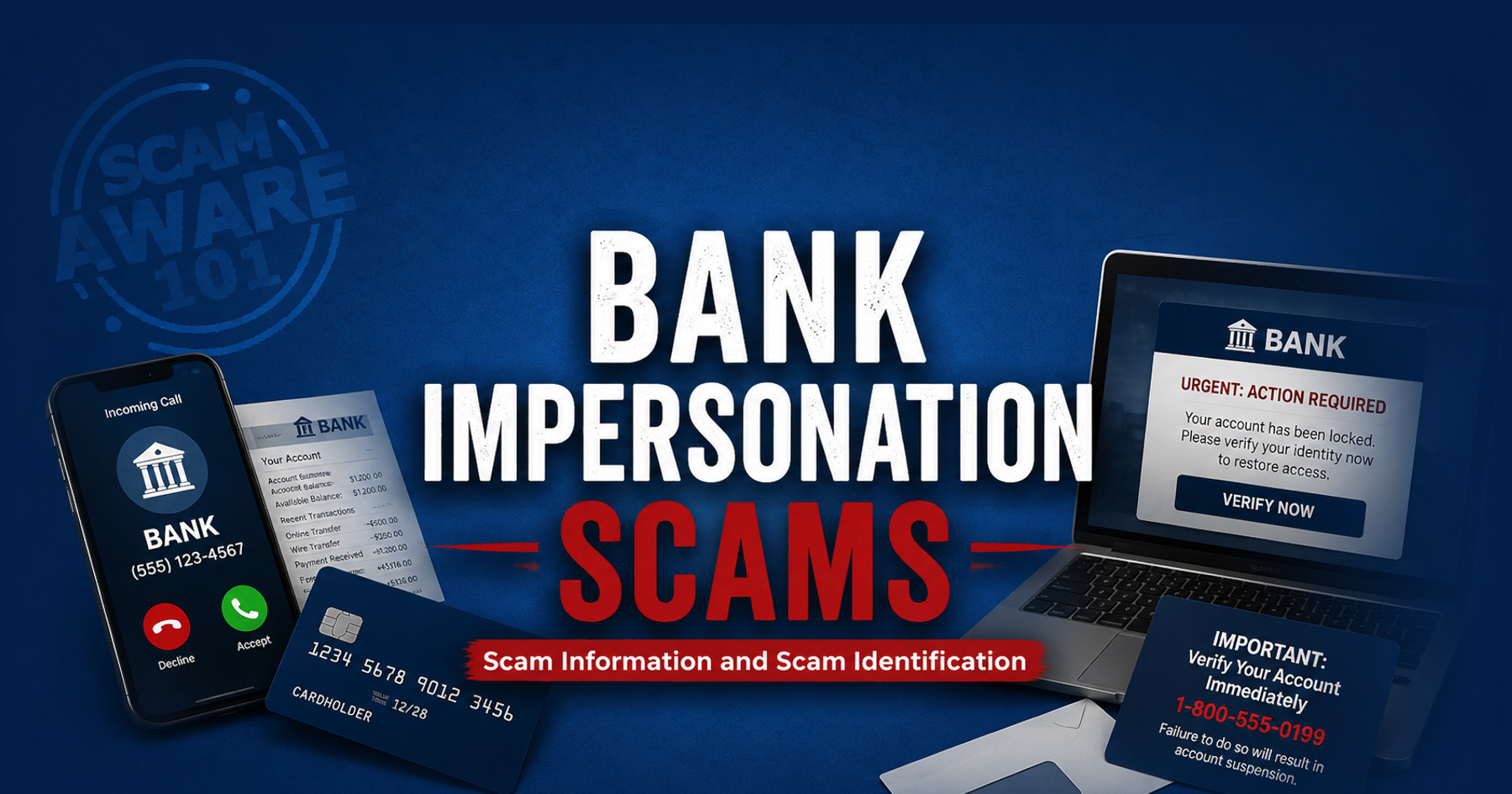
A bank impersonation scam is a fraud where scammers pretend to be a victim's bank, credit union, card issuer, or fraud department to steal money, account access, or personal information. The scam often begins with an urgent phone call, text message, email, or app notification claiming there is suspicious activity, a locked account, a failed payment, or a security problem. Scammers may spoof the bank's phone number or use convincing branding so the message appears legitimate. They usually pressure the victim to "verify" their identity, confirm account details, share a one-time passcode, move money to a "safe" account, or install remote access software. In many cases, the scammer already has some personal information, which makes the contact seem more credible. Once the victim follows the instructions, the scammer may drain the account, take over online banking, open new payment transfers, or use the victim's identity for further fraud.
How the Scammers Target New Victims:
Bank impersonation scammers commonly contact victims by phone, text message, email, social media message, messaging app, or fake pop-up alert. They may send a text that looks like a fraud alert and asks the victim to reply "yes" or "no" to confirm a transaction. After the victim responds, the scammer may call while pretending to be from the bank's fraud department. Some scammers use caller ID spoofing so the call appears to come from the real bank's customer service number. Others send links to fake banking websites that capture usernames, passwords, PINs, debit card numbers, and verification codes.
Who the Scammers Impersonate:
Bank Impersonation scammers may impersonate:
- A bank's fraud department
- A credit union representative
- A debit card or credit card issuer
- An online banking support agent
- A bank security team or risk department
- A payment app or digital wallet support team linked to the bank
- A loan, mortgage, or account servicing department
- A bank manager or branch employee
How to Spot a "Bank Impersonation" Scam:
What the Scammers Say (Scam Narratives / Fake Storylines):
Scammers often claim there has been suspicious activity on the victim's account, such as a fraudulent wire transfer, debit card purchase, Zelle transfer, ATM withdrawal, or online login attempt. They may say the account has been frozen, compromised, or placed under review and that immediate action is needed to prevent loss. Some claim the victim must move funds to a "safe account" while the bank investigates. Others say the victim needs to reverse a transaction, verify a refund, confirm identity, update security settings, or read back a one-time passcode. The scam may also involve a fake fraud alert text followed by a phone call from someone claiming to help stop the charge.
Information the Scammers Ask For:
Bank impersonation scammers may ask for online banking usernames, passwords, PINs, debit card numbers, credit card numbers, Social Security numbers, account numbers, routing numbers, birth dates, addresses, security question answers, or one-time verification codes. They may ask the victim to approve a login, approve a transfer, send money through Zelle or another payment service, buy gift cards, withdraw cash, send a wire transfer, or move money into cryptocurrency. Some ask the victim to download screen-sharing or remote access software so they can "secure" the account. A real bank will not ask a customer to provide a password, full PIN, or one-time passcode over an unsolicited call or message.
Scam Warning Signs and Red Flags:
Major red flags include urgent pressure, threats of account closure, requests for verification codes, instructions to move money to another account, or demands to keep the issue secret. Caller ID that appears to show the bank's real number is not proof the call is legitimate because numbers can be spoofed. Links in text messages or emails that ask the victim to log in should be treated as suspicious, especially when the message creates panic about fraud or account suspension. Any request to send money to yourself, a "safe account," a bank employee, or a new recipient is a strong warning sign. Poor grammar, unusual sender addresses, unexpected attachments, and requests to install software are also common indicators of a scam.
Victim Experiences and Scam Reports:
Victims often report that the scam felt convincing because the caller knew their name, bank name, last digits of an account or card, or recent transaction details. Many victims first receive a fake fraud alert text, then receive a call from a spoofed bank number, making the scam seem coordinated and official. Some victims are coached through transfers while the scammer claims to be blocking fraud in real time. Others are tricked into giving one-time passcodes that allow the scammer to log in, reset credentials, or authorize payments. Victims may discover the fraud only after large transfers, debit card purchases, wire payments, or peer-to-peer payments have already cleared.
Protect Yourself from "Bank Impersonation" Scams:
Dangerous Actions to Avoid:
Do not give passwords, PINs, full card numbers, security answers, or one-time passcodes to anyone who contacts you unexpectedly. Do not click banking links in unsolicited texts or emails. Do not move money because a caller says it must be placed in a "safe" account. Do not install remote access software or screen-sharing tools for someone claiming to be from your bank. Do not stay on the phone with a suspicious caller while logging into online banking, approving alerts, or making transfers.
Best Practices to Stay Safe:
Hang up and contact the bank using the number on the back of your card, the bank's official website, or the official mobile app. Type the bank's website address directly instead of using links from messages. Enable strong multi-factor authentication, use a unique password for banking, and set account alerts for transfers, card use, and login activity. Review bank and card statements often and report suspicious activity immediately. If you gave information to a scammer, contact the bank at once, change your password, revoke suspicious devices, freeze affected cards, and monitor your credit.
Key Takeaways to Stay Safe:
A real bank will not demand that you reveal a one-time passcode, transfer money to a "safe" account, or install remote access software because of an unsolicited call or message. Caller ID and branded text messages can be faked. The safest response to any urgent banking alert is to stop, disconnect, and contact the bank through an official channel. Treat secrecy, pressure, and money movement as major warning signs. When in doubt, do not interact with the message or caller directly, verify independently with the bank.


